

Quick answer: Lip blush can look uneven while it heals. The color starts brighter, then may flake and appear lighter or patchy before it settles. Do not pick at dry skin or try to correct the color early. If swelling or redness worsens, pain increases, or you develop pus, open sores, fever, or chills, contact a healthcare professional promptly.
Why lip blush can look patchy during healing
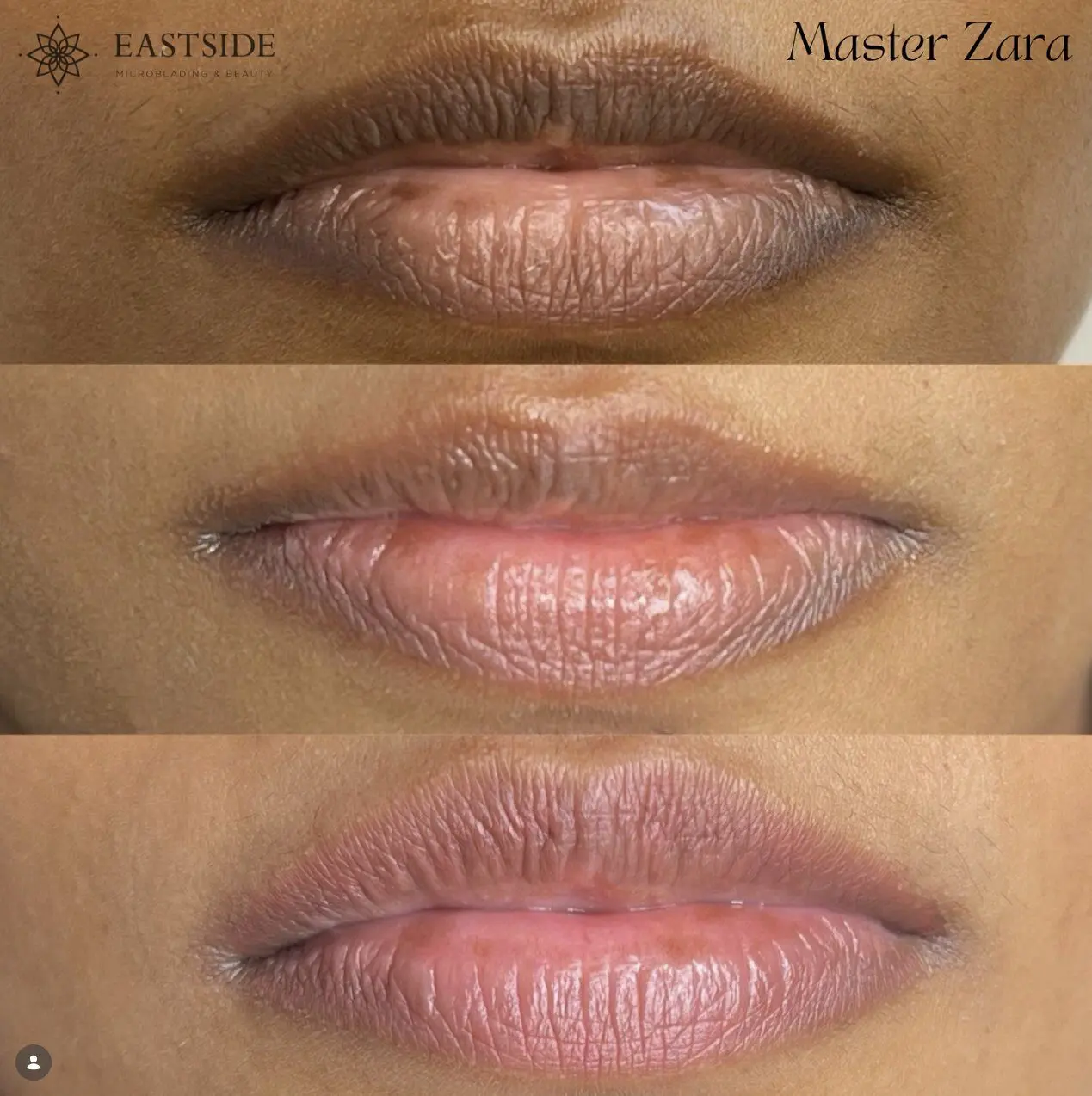
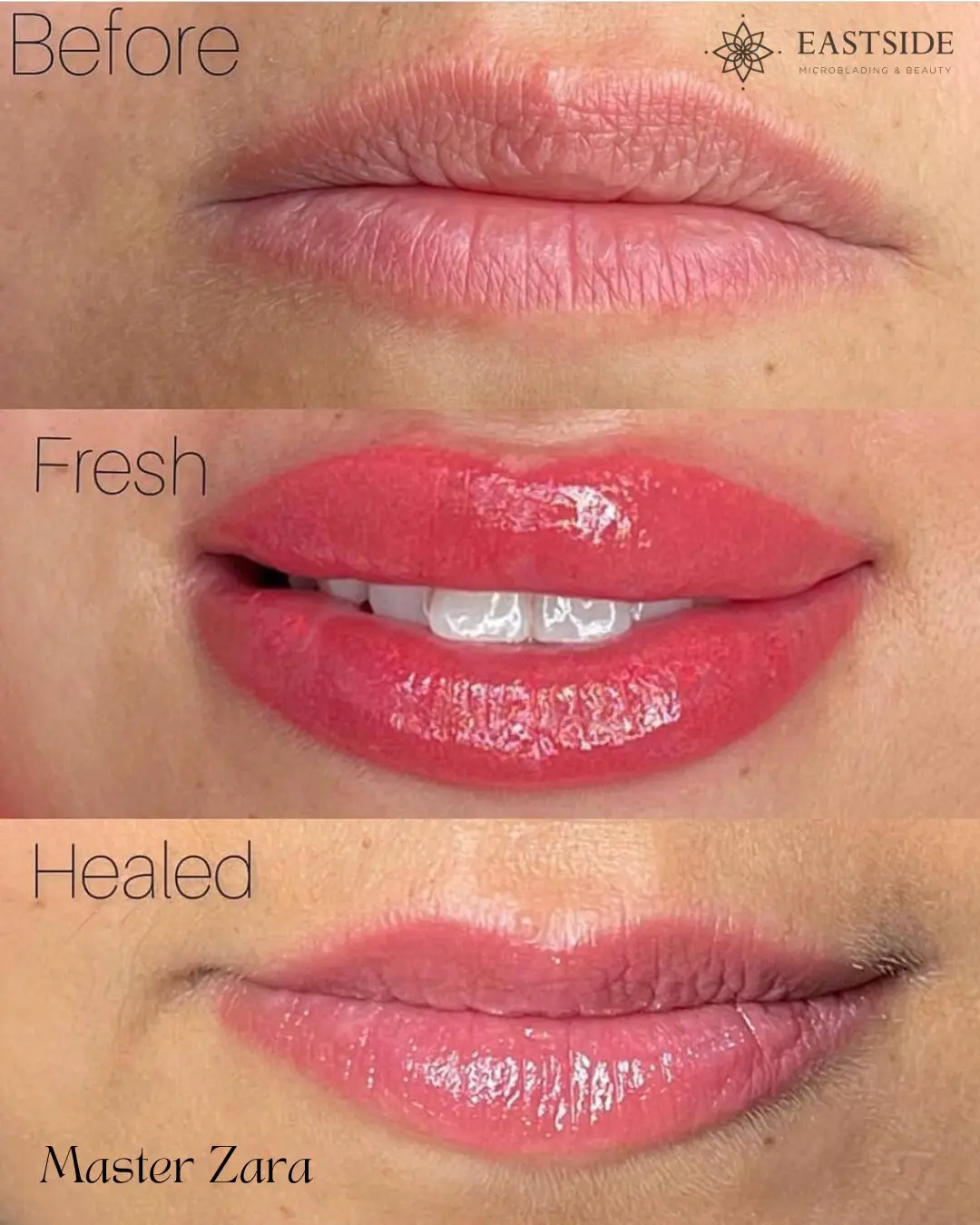
Lips do not heal in one smooth, even pass. Fresh color looks brighter than the final result. As the surface renews, small areas can flake at different times. That makes the color underneath look uneven even when the appointment went exactly as planned.
The hard part is giving the lips time. Picking, scrubbing, or adding products your artist did not recommend can irritate the skin and lift pigment. Let the dry skin release on its own.
If you want the full appointment walk-through, read what to expect at your first lip blushing appointment.
A practical healing arc
The first days
The lips can look bright, feel dry or tight, and show mild swelling or tenderness. Follow the aftercare plan from your artist and keep the area clean according to those instructions.
The flaky stage
Color can seem to disappear in spots as the surface flakes. Do not judge the final shape or shade during this stage. The lips are still changing.
The settling stage
The color continues to settle after visible flaking ends. Your artist needs to see the fully healed result before deciding whether any area needs refinement.
What to do when the color looks uneven
- Leave flakes alone. Do not bite, peel, or scrub them.
- Use only approved aftercare. More product is not better.
- Avoid irritating foods and products. Follow the specific guidance your artist gave you.
- Keep makeup off healing lips. Wait until your artist says the skin is ready.
- Protect healed lips from the sun. Consistent protection helps limit fading.
If you are unsure about a symptom, contact the studio. A quick conversation is better than experimenting with the healing skin.
When patchiness needs a perfecting appointment
Once the lips are fully healed, the artist can see whether an area retained less pigment. The perfecting appointment is designed for that evaluation. It is not a sign that you did something wrong or that the first appointment failed.
Persistent unevenness can come from healing, natural lip tone, scar tissue, prior work, or how the skin accepted pigment. The right next step depends on what your artist sees after the color has settled.
What if the color or outline still looks wrong?
Do not rush into another treatment. A trained artist should assess the existing pigment, the natural lip tone, and the condition of the skin first. Some concerns can be refined. Others may need a different approach, including lip neutralization.
Explore the lip blushing service to see how Eastside plans color, shape, and a soft healed finish.
When to get medical help
The American Academy of Dermatology advises seeking medical care when redness spreads or darkens instead of improving, pain worsens, or symptoms include pus, open sores, fever, or chills. The FDA’s permanent makeup fact sheet also notes that infections and adverse reactions can occur with tattoo inks.
Eastside can explain the expected healing process, but the studio does not diagnose or treat an infection or allergic reaction. Contact a qualified healthcare professional when symptoms concern you.
Lip blush healing questions
Why did my lip blush look even at first and patchy later?
Different areas can flake at different times. The color underneath can also look lighter before it settles.
Should I peel dry skin from my lips?
No. Let it release on its own. Peeling can irritate the skin and remove pigment.
When can I judge the final lip blush color?
After the full healing and settling period your artist gave you. Visible flaking ending does not always mean the color has finished settling.
Can a patchy healed result be fixed?
Often a perfecting appointment can refine light areas. Your artist needs to assess the healed lips before recommending treatment.
Sources
- U.S. Food and Drug Administration. Tattoos & Permanent Makeup: Fact Sheet. Accessed July 13, 2026.
- American Academy of Dermatology. Tattoos: 7 unexpected skin reactions and what to do about them. Accessed July 13, 2026.
Book a Recommendation Call to talk through your goals, natural lip tone, and whether lip blush is the right fit.